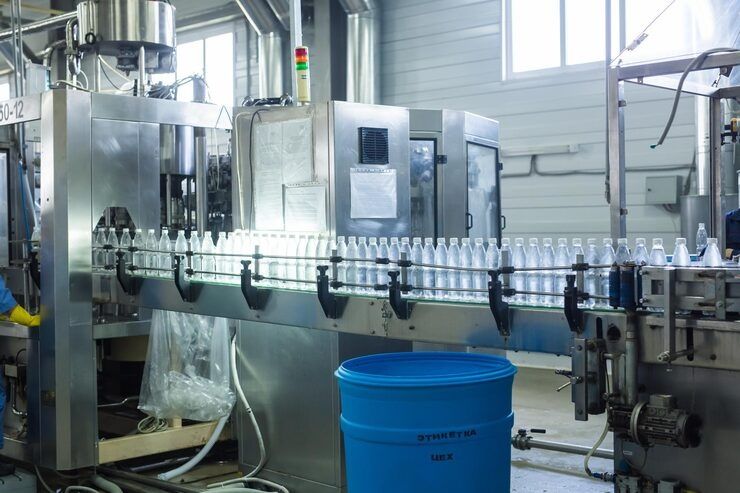
Liquid filling and packaging machines are crucial system used to degree, fill, seal, and bundle liquid products effectively and appropriately. These machines are widely utilized in industries consisting of meals and liquids, prescribed drugs, cosmetics, chemical substances, and family merchandise.
Historically, liquid filling began as a guide undertaking susceptible to spillage, inconsistency, and contamination. With industrialization, equipment changed into advanced to standardize and automate the technique, enhancing productivity and great control. Modern machines integrate precision, speed, and hygiene, ensuring products meet protection and regulatory standards.
Importance
The function of liquid filling and packaging machines extends beyond speed and automation:
Accuracy and consistency:
Machines make sure precise volume measurements for bottles, cans, or pouches.
Product safety and hygiene:
Automated structures reduce human touch, minimizing infection dangers.
Efficiency and scalability:
High-pace machines growth production capability, supporting large-scale operations.
Waste discount: Minimizes product loss due to overfilling or spillage.
Compliance:
Helps manufacturers meet enterprise requirements for packaging and labeling.
By addressing efficiency, protection, and regulatory compliance, those machines support each customer protection and enterprise productivity.
Newer updates
Recent development in 2023-2024 shows sufficient symptoms in liquid filling and packaging time:
Smart automation:
Machine with IoT and AI screens fills levels, detects deviations and adapts to operation.
Sustainable packaging:
Environmentally friendly bottles, biodegradable films and tools to handle the recycled room are adapted.
Flexible filling solutions:
Modular systems now adjust different field forms and liquid viscosity.
Hygienetic reforms:
Advanced CIP (Clean-in-Aarea) and Sterilization Technologies ensure compliance in food, drink and pharmaceutical industries.
Increase in global demand:
in 2024 reports for increasing adoption in emerging markets, especially for beverages and personal care products.
These updates show how the arena develops to meet the requirements for efficiency, stability and hygiene.
Laws or guidelines
Liquid filling and packaging machines shall follow serious guidelines and requirements:
Food security rules:
FDA (U.S.), EFSA (Europe) compliance and various national food protection authorities ensure safe packaging.
Pharmaceutical compliance:
Medication treatment machines want to meet CGMP (modern good production practices) and ISO requirements.
Environmental policy:
Rules motivate when using recycled and biodegradable packaging materials.
Workplace Safety Act:
Professional safety recommendations protect operators from mechanical risks and contact with chemical substances.
Labeling requirements:
Packaging machines must help with accurate labeling to meet the gel linen requirements.
The following laws consider security, compliance with hooliganism and customer.
Tools and resources
Many gears and resources help companies in adaptation to fluid filling and packaging operations:|
Simulation program:
Model line predicts efficiency and construction throw.
Iot competition Tracking:
The Spor-Gadget reduces downtime, and guarantees regular filling.
Equipment database:
Many filling and comparison for packaging machines provide specifications and comparisons.
Maintenance application:
Planning, troubleshooting and preventive safety indications.
Regulatory portal:
Sites such as FDA, EFSA and ISO provide guidance for compliance and security standards.
| Machine Type | Function | Typical Applications |
|---|---|---|
| Gravity Fillers | Uses gravity to fill liquids | Low-viscosity beverages, water |
| Piston Fillers | Pushes precise liquid volumes | Dairy, sauces, oils |
| Rotary Fillers | Multi-head high-speed filling | Juices, pharmaceuticals |
| Pump Fillers | Pumps liquids at controlled flow | Viscous liquids like syrups, gels |
| Auger Fillers | For powders and semi-liquids | Chemical and food products |
FAQs
What is a liquid filler?
It is a tool designed to measure and spread beverages exactly in the space for packaging.
What industries use fluid filling and packaging machines?
General industries include foods and fluids, drugs, cosmetics, chemical substances and family goods.
How does automation increase fluid filling?
Automation will increase accuracy, reduce pollution, reduce waste and increase the production rate.
Are these machines suitable for small -scale operations?
Yes, compact and semi -automatic structures allow small manufacturers to effectively use automation.
What maintenance is required for liquid filling machines?
Regular cleaning, calibration and part inspection perform some accuracy, hygiene and long -term periods of general performance.
Conclusion
Liquid filling and packaging machines are essential to trendy manufacturing, ensuring performance, accuracy, and product protection. From high-pace rotary fillers to modular piston machines, those structures serve numerous industries and applications.
With latest innovations in automation, IoT integration, and green packaging, liquid filling equipment continues to conform, imparting higher productivity and sustainability. Compliance with food, pharmaceutical, and environmental rules guarantees secure and reliable operations.
As production demands boom and sustainability turns into a concern, liquid filling and packaging machines will continue to be critical for companies global, supporting efficiency, first-rate, and purchaser accept as true with.